
National Black HIV/AIDS Awareness Day: Everyday Advocacy in Florida
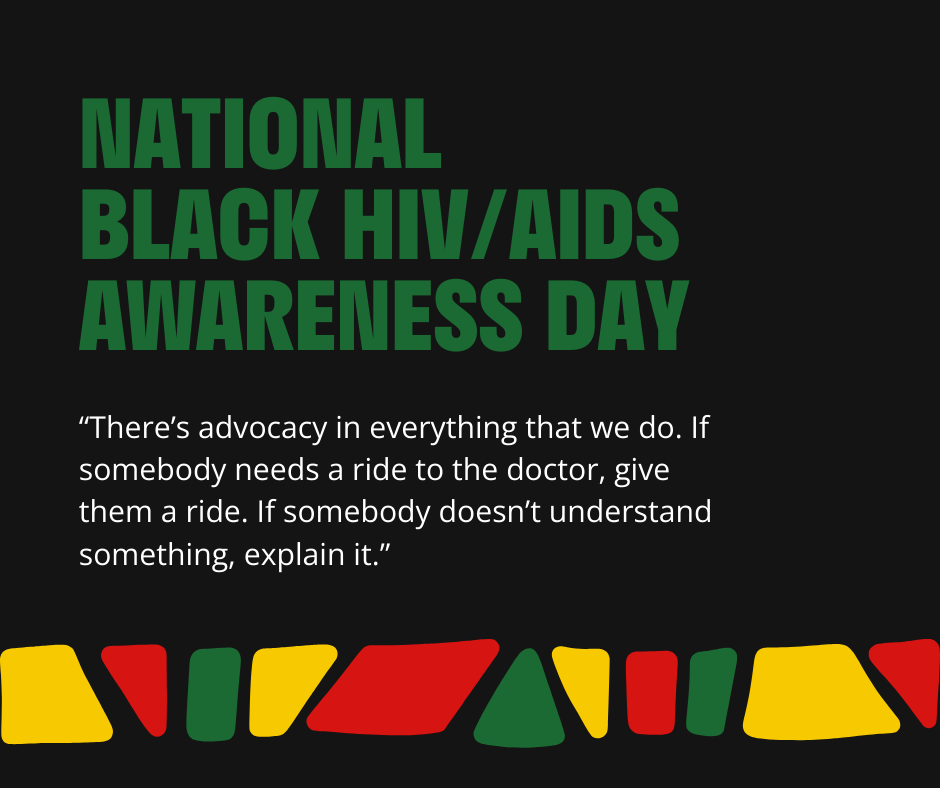
National Black HIV/AIDS Awareness Day is a moment to recognize that staying in care often depends on the everyday work of people who show up for one another. In a healthcare system shaped by inequality, it takes constant care, support, and persistence to make sure people living with HIV can access medication, stay connected to providers, and live with dignity. It is also a time to ask whose lives are protected, whose voices are heard, and whose care is treated as essential.
That reality is front of mind for Shayla, a 39-year-old Black woman, a lifetime survivor, and a member of the U.S. People Living with HIV Caucus in Florida. She is one of many Black advocates whose work may not be on the front page, but whose daily actions shape real health outcomes for people living with HIV.
As she told us, “There’s advocacy in everything that we do. If somebody needs a ride to the doctor, give them a ride. If somebody doesn’t understand something, explain it.”
Those questions of care and protection feel especially urgent right now in Florida. In January, the state proposed major changes to the AIDS Drug Assistance Program (ADAP). The proposed changes would eliminate health insurance coverage and medication assistance for 16,000 Floridians. While state officials have since said they will move through a formal rulemaking process before finalizing any changes, Floridians have every reason to remain concerned and vigilant.
For Black communities already disproportionately impacted by HIV, these decisions are far more personal than the numbers being thrown around by policymakers. “People may fall out of care from that. They may lose their continuity of care. And they also may come into issues of financial instability.”
Shayla emphasized that changes to income eligibility and insurance support would put many people living with HIV in impossible positions, even if they are working or have been stable in care for years. HIV medication can cost thousands of dollars a month without coverage, and the loss of support creates additional stress that can upend people’s lives.
Although Shayla is not currently on ADAP, she made it clear that stability is never guaranteed in a system where healthcare access is tied to income, employment, and shifting policies. “All this stuff is temporary. My situation can change today or tomorrow, and then I would have to pivot and figure out a way to get myself medication.”
That understanding is part of why she continues to speak up, not only for herself but for those who find themselves unsure of what comes next.
When Shayla talks about the work she does, she does not separate advocacy from care. She talked about showing up for people in the moments when the healthcare system feels overwhelming, confusing, or isolating. “I go to doctors’ appointments with people all the time. People always ask me to go to the emergency room with them.”
She described helping people navigate insurance, looking up information when answers are hard to find, and staying with someone long enough to make sure they are not facing the system alone.
That same care showed up when people gathered to protest the proposed ADAP changes. Shayla described how a demonstration at the Health Department in Tallahassee quickly became a space where advocacy and mutual aid overlapped. While people were demanding accountability from the state, they were also sharing resources, comparing information, and helping each other think through what to do next. “When I was out protesting, we were talking about medication repositories, helping folks with insurance, helping people understand what their options were.”
She explained that people were encouraging one another to talk with doctors early, to ask questions before deadlines hit, and to prepare together for possible disruptions in care. “It was a lot of talking about, if it does happen, what can we do?”
For Shayla, that moment captured the heart of HIV advocacy. Even in protest, there was a focus on keeping people safe, supported, and connected to care.
Before we ended our conversation, Shayla wanted people living with HIV in Florida to know they are not alone. “People should not have to figure out how to take care of themselves or figure out how to get their medication. People have dignity, and they need to continue to have dignity.”
Her call to action for National Black HIV/AIDS Awareness Day is simple. People can get involved in many ways– whether that means sharing information, offering a ride, or helping a friend navigate care.
Small actions matter, especially in systems that make care harder to access. Showing up for one another is how communities protect themselves when policies fall short.